


Braiding is an ancient technique that has been used for thousands of years, primarily to create ropes, cords, and fabrics by interweaving strands of fibers. Over time, this intricate art, once done manually, evolved into an industrial process with the invention of braiding machines. Today, braiding machines are an integral part of various industries such as textiles, medical devices, and automotive sectors, offering precision, speed, and consistency. Let’s dive into the history of braiding machines, exploring their development and impact on modern manufacturing.
The History of Braiding Machines: From Handcraft to Modern Precision
Early Braiding Techniques: Craftsmanship by Hand
Braiding as a craft date back to prehistoric times. Evidence of early braids can be found in ancient Egyptian artifacts and indigenous cultures across the globe. These early techniques were used to make everything from fishing nets and sandals to more ornamental items like jewelry and ceremonial fabrics. In many cultures, braiding was passed down through generations, with specific patterns and techniques held in high regard for their complexity and aesthetic value.
For centuries, braiding was a slow, labor-intensive process done exclusively by hand. Whether working with animal sinew, plant fibers, or even hair, artisans had to carefully manage multiple strands to create uniform braids. However, with the Industrial Revolution on the horizon, this was about to change.

Ancient Hand Braiding
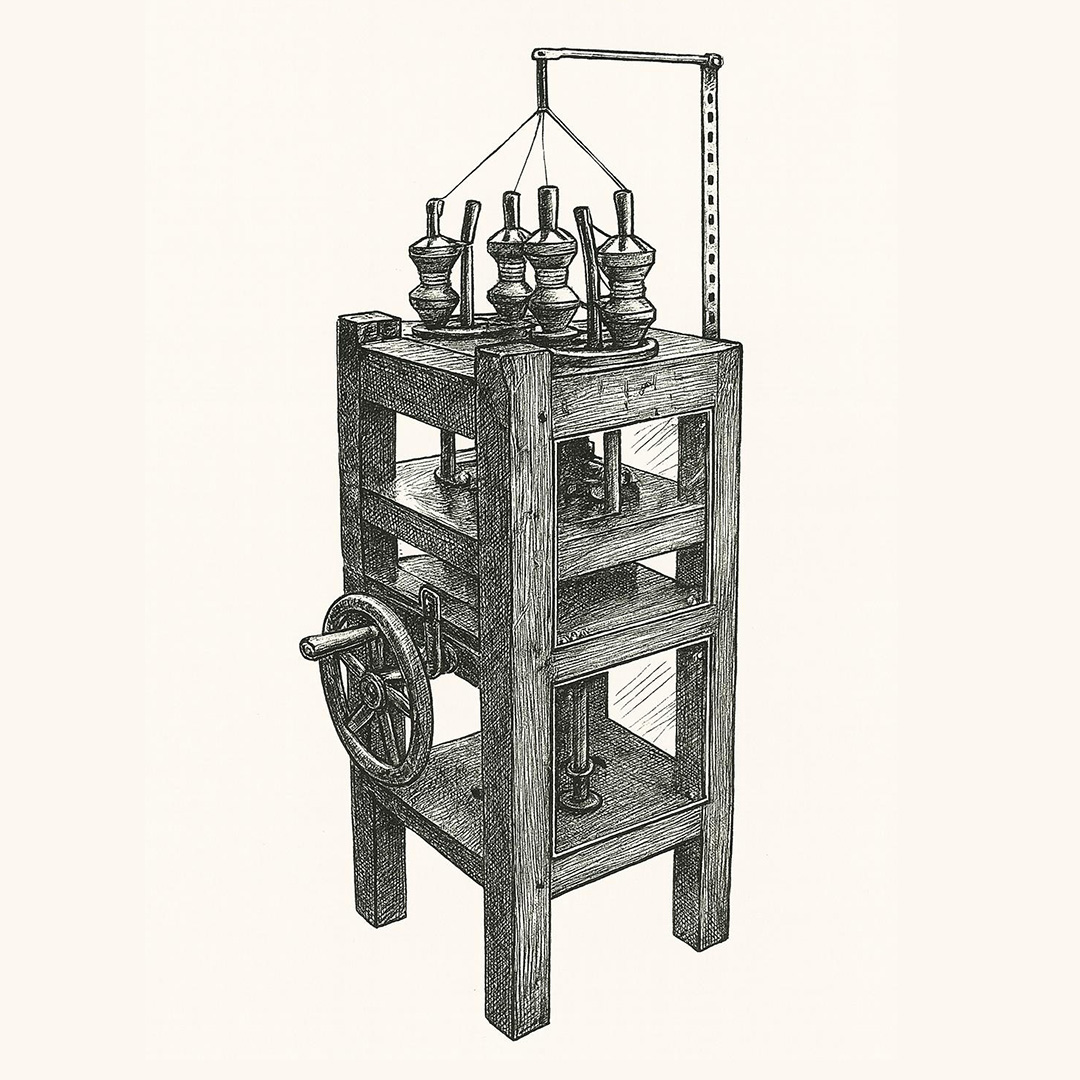
Early Braiding Machine Representation – 19th century
The Advent of Braiding Machines: A Leap Towards Automation
The first mechanized braiding machine emerged in the early 18th century, as inventors sought to meet the growing demand for braided materials, particularly in the textile and rope-making industries. These machines were inspired by the principle of weaving looms but were specifically designed to manage multiple strands of fibers in a way that mimicked the interlacing action of hand-braiding.
The earliest braiding machines had limited capabilities, designed primarily for producing simple braids such as ropes and narrow bands. However, they marked a significant advancement in manufacturing by dramatically increasing the speed and efficiency of braid production.
19th and Early 20th Century: Evolution and Industrial Use
By the 19th century, braiding machines became more sophisticated and began to be widely adopted in factories across Europe and the United States. With improvements in metallurgy and precision engineering, these machines could braid complex patterns and accommodate a broader range of materials, such as cotton, silk, and jute.
One of the most important breakthroughs was the development of the maypole braider, which enabled the production of tubular braids, essential for products like cables and shoelaces. This innovation opened new applications for braided materials in expanding industries, including automotive and electrical sectors.
As the Industrial Revolution progressed into the 20th century, the introduction of electric motor-powered machines represented a significant leap forward in speed and reliability. By the early 1900s, these machines could handle more complex braids and materials, meeting the growing industrial demands for braided products across sectors like telecommunications, textiles, and construction.

Industrial Revolution. 19th Century Braiding Factory

Ratera Braiders with Oil bath
RATERA and the Advances in Braiding Technology (1960s–80s)
During the 1960s and 70s, RATERA emerged as a pioneer in adopting oil bath technology, which allowed machines to operate at much higher speeds with improved durability. By immersing moving parts in oil, friction was significantly reduced, enabling smoother operation and extending the lifespan of the machines. This innovation was especially beneficial for industries requiring heavy-duty, continuous operation.
In 1983, RATERA introduced the 83L system, featuring a Ø63 x 200mm bobbin that lowered the carrier’s center of gravity, enhancing stability and efficiency. With precision-machined horn-gears, the 83L system achieved horn-gear speeds of up to 330 revolutions per minute (RPM), making it one of the fastest vertical carrier braiding machines of its time. This compact and efficient system set a new standard for high-speed braiding, meeting the demands for precision in various braided products.

Helical Gear – Key element for speed & reliability

High-speed RATERA braiding 16B-E115
Modern Braiding Machines: Advanced Materials and Technology
Today, braiding machines have evolved into highly specialized tools that can handle a wide variety of materials, from traditional fibers to high-performance synthetic and composite materials. These machines are essential in the production of composite materials, which are used in industries such as aerospace, automotive, and sports equipment manufacturing.
Modern braiding machines are often employed to braid carbon fiber, glass fiber, and aramid fiber, which are essential in creating lightweight yet incredibly strong components for cars, airplanes, and even sporting goods. These advanced materials are valued for their strength-to-weight ratio and durability, making them ideal for applications where performance and weight are critical factors.
In addition to handling complex materials, today’s braiding machines are equipped with sophisticated electronic systems. Servo motors, touchscreen controls, and real-time monitoring systems allow for precise adjustments and customization, ensuring that braids meet exacting specifications. With modern technology, operators can fine-tune machine settings to accommodate various materials and braid patterns, greatly enhancing productivity and quality.

Modern RATERA Braiding Machine for Round-flat-round sutures
Conclusion: From Handcraft to Modern Braiding Innovation
The journey of braiding machines from hand-operated looms to today’s high-tech, automated systems reflects the growing demand for braided products across a wide range of industries. Throughout history, these machines have undergone numerous technological transformations, with innovations like RATERA’s oil bath technology and the 83L system pushing the boundaries of speed and precision.
As industries continue to evolve, braiding machines will remain at the forefront of innovation, playing a crucial role in the production of everything from high-performance composites to intricate braided sutures. Whether in aerospace, medical devices, or automotive manufacturing, the versatility and efficiency of braiding machines make them indispensable in modern industry.